
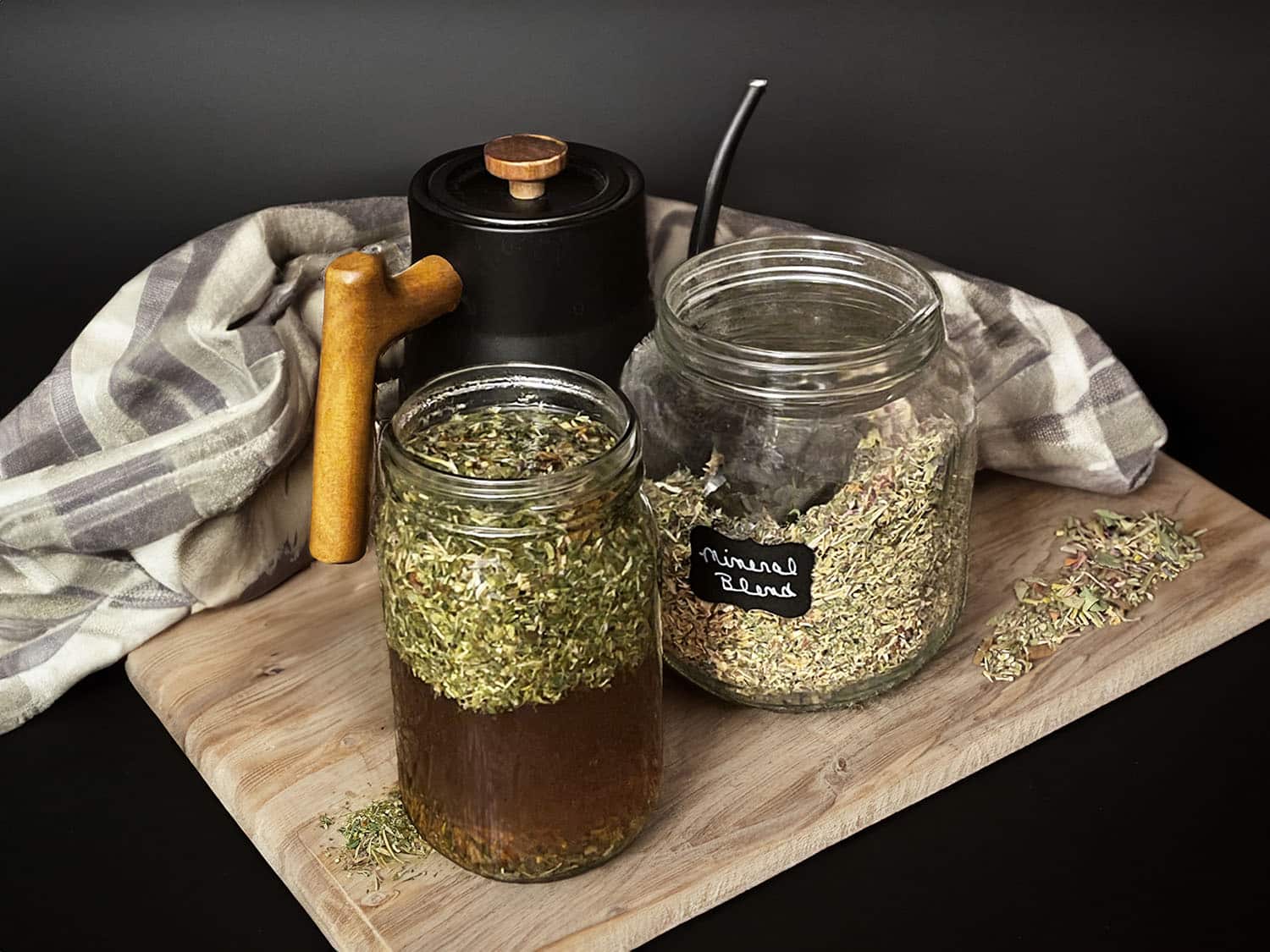

Every so often, I like to reevaluate my existing self-care routines, and fine tune them (not just at the New Year, but it’s as good a time as any!)
Ditch what’s not working and double down on what is.
This year, I’ve decided that I’d like to add more nourishing herbal infusions to our routine.
A nourishing herbal infusion is a special type of herbal preparation that involves steeping nutritive herbs for an extended period of time in order to extract their vitamins, minerals and phytonutrients. They’re a great way to support overall health and well-being. Some use NHIs as a whole-food multi-vitamin substitute. Depending on the herbs you choose, they can help to boost the immune system, increase energy levels and promote good digestion.
The principles and practices behind nourishing herbal infusions have deep historical roots. While I’m not aware of a specific historical origin, the practice of extracting the beneficial compounds from herbs through steeping in hot water has been a longstanding tradition across cultures. Contemporary herbalist Susun Weed has played a significant role in popularizing the term “nourishing herbal infusion” through her teachings of the Wise Woman Tradition.
The process is not complicated or difficult, but it’s a bit different than making a cup of herbal tea (tisane), which involves fewer herbs and a much shorter steeping time.
Choosing your herbs
Nourishing herbal infusions usually feature a selection of herbs known for their rich nutrient profiles. The choice of herbs can vary based on personal preferences, regional availability and specific health goals. For example, nettle can help to support healthy bones and relieve allergies, while red clover can help to balance hormones and relieve menopause symptoms.
Many herbalists keep it simple with just one herb, but you can choose to make a nourishing herbal infusion with two, three, four or more. Customize away!
Some nutritive herbs to consider for a nourishing herbal infusion blend:
High in iron, calcium and other minerals, nettle (Urtica dioica) is often used to support healthy bones, skin, hair and overall health — especially during times of increased nutritional needs. It’s also a natural anti-inflammatory and can help to relieve allergies (particularly when used fresh), arthritis and other inflammatory conditions.
The flavor of nettle can be described as earthy, mineral (salty) and slightly grassy.
Rich in phytoestrogens, red clover (Trifolium pratense) is known for its phytoestrogen content and is often used to support hormonal balance, especially in women. It can relieve symptoms of menopause such as hot flashes and night sweats. It’s also a blood purifier and can help to support healthy skin.
The flavor of red clover is often described as sweet, mild, and slightly floral.
Oat tops and Oatstraw (Avena sativa) are valued for its abundance of B-vitamins and minerals such as silica, calcium and magnesium. Oats are believed to nourish the nervous system and support general well-being and restful sleep.
Oats have a mild, slightly sweet and earthy flavor that is characterized by its gentle, soothing quality.
Horsetail (Equisetum arvense) is rich in minerals, especially silica, which is essential for the health of bones, hair, skin and nails. Silica is believed to contribute to the strength and elasticity of connective tissues.
Horsetail has a fairly neutral flavor that may be described as mildly earthy and slightly astringent.
Alfalfa (Medicago sativa) a nutrient-rich herb known for its deep root system, which allows it to absorb a variety of minerals from the soil, making it a potential source of essential nutrients.
Alfalfa has a mild, grassy and slightly nutty flavor. It’s a versatile herb that pairs well with other herbs in herbal infusions.
Chickweed (Stellaria media) is often included in nourishing herbal infusions for its nutrient content, including vitamins and minerals.
Fresh chickweed is optimal to maximize its nutrient content, though dried chickweed can still be used in infusions when fresh is not available.
Rich in allantoin, comfrey (Symphytum officinale) can help to promote wound healing and reduce inflammation. It’s also a natural demulcent and can help to soothe and protect mucous membranes in the body.
Comfrey has an earthy, green taste reminiscent of spinach or beet greens.
Internal use of comfrey is controversial because it contains compounds called pyrrolizidine alkaloids (PAs), which have been associated with liver toxicity in lab rats. Please do your own research, but you can read my opinion about the fear mongering over PAs here.
While it may not be traditionally classified as a “nourishing” herb in the same way as nettle or oatstraw, linden flowers (Tilia spp.) contain minerals such as calcium, magnesium and potassium. Linden is valued for its calming properties and can help to reduce anxiety, promote restful sleep and support the immune system.
Linden’s leaves and flowers impart a mild, sweet flavor to a nourishing herbal infusion.
Raspberry leaf (Rubus idaeus) is a popular herb for women’s health and is often consumed to support the female reproductive system. It’s a natural astringent and can help to tone and strengthen the uterus. It’s especially beneficial during pregnancy and menstruation.
Raspberry leaf has a mild and pleasant “earthy” flavor and imparts a bit of balanced astringency to nourishing herbal infusions.
Dandelion (Taraxacum officinale) is rich in vitamins and minerals — including calcium and potassium — and can help to support overall health and vitality. It’s a natural diuretic and can help to support healthy kidney function.
Dandelion leaf is known for its mildly bitter taste with subtle earthy undertones. Dandelion root will have a more robust and distinctly bitter taste compared to the leaves.
The leaves of Plantago spp. are rich in various vitamins, minerals, and other beneficial compounds, making them a nutritious addition to herbal infusions. Plantain contains vitamins A, C, and K, as well as minerals like calcium, magnesium, and potassium.
Plantain is known for its soothing and cooling properties, which can help support the respiratory system and promote overall well-being. It’s also been traditionally used to support digestive health and promote healthy digestion.
Used in a nourishing herbal infusion, the taste of plantain can be described as mild and pleasant, making it easy to incorporate into blends with other herbs. While the slight bitterness of plantain may be detectable, it is usually not overpowering, especially when combined with other herbs known for their more robust or aromatic flavors.
Hawthorn (Crataegus spp.) is a natural cardiovascular tonic and can help to support healthy heart function. It’s also a natural diuretic and can help to reduce fluid retention.
Hawthorn leaf and flower is known for its mild, slightly astringent flavor, while hawthorn berries add a subtly sweet tartness.
Burdock root (Arctium lappa) is a natural blood purifier and can help to support healthy liver function. It’s also rich in antioxidants and can help to protect the body against free radical damage. It contains inulin, a prebiotic that can help keep your gut bacteria happy and healthy.
Burdock root has a distinctive earthy and slightly sweet flavor.
Rose hips, the fruit of the rose plant (Rosa spp.) are high in vitamin C and other antioxidants that can help to support a healthy immune system. They’re also a natural anti-inflammatory and can help to relieve joint pain and stiffness.
Rose hips have a naturally sweet and slightly tart flavor.
Elderberry (Sambucus nigra) is a natural immune booster and can help protect against colds, flu and other respiratory infections. It’s also a natural anti-inflammatory and can help to relieve joint pain and inflammation.
Elderberries have a delightfully balanced sweet-tart flavor.
While not traditionally classified as a “nourishing” herb, hibiscus (Hibiscus sabdariffa) adds tart flavor, vibrant color and antioxidant properties to nourishing herbal infusions.
The tart flavor of hibiscus is sometimes likened to that of cranberries.
Hibiscus is generally safe, but pregnant women should be mindful of its potential blood pressure-lowering effects, and moderation is recommended.
Marshmallow root (Althaea officinalis) is a demulcent and can help to soothe and protect mucous membranes in the body, such as the throat and digestive tract. It’s also a natural expectorant and can help to relieve coughs and congestion.
Marshmallow root adds a mild, sweet flavor and soothing mouthfeel, thanks to its mucilage, a gel-like substance that imparts a soothing and slippery texture to the infusion.
** If you include marshmallow root in your nourishing infusion, it’s best to do a separate cold infusion and combine it with your hot infused herbs after the steeping period.
Cleavers (Galium aparine) are often considered more of a tonic or alterative herb rather than a highly nutritive herb like nettle or oatstraw. They are well-known for their affinity for the lymphatic system and have a gentle diuretic effect, supporting the flow of lymphatic fluid and potentially aiding in the removal of waste products from the body.
Cleavers have a mild and slightly sweet flavor, making it versatile for use in herbal blends and infusions.
Lemon balm (Melissa officinalis) is a natural nervine and can help to calm the nervous system and reduce anxiety. It’s also a natural digestive aid and can help to relieve indigestion and bloating.
Lemon balm adds a delightful and uplifting lemony flavor to a nourishing herbal infusion.
So many fabulous herbs to choose from! 👏👏👏
If you like, toward the end of the infusion period, you can also incorporate a small amount of aromatic herbs such as Mentha spp. (mint), Zingiber officinale (ginger) or even some needles of Pinus spp. (pine) for flavor. (Avoid adding aromatics at beginning of the infusion, as the extra-long steeping time will cause them to overpower your infusion in an unpleasant way.)
That said, you do you! Select your NHI herbs depending on your personal preferences and health goals and adjust the strength and flavors to your liking.
Obligatory fine print: Before incorporating new herbs into your routine, especially if you have specific health concerns or are pregnant, it’s advisable to consult with a healthcare professional or a qualified herbalist for personalized guidance. Starting with one herb at a time and observing how your body responds can help you tailor your herbal infusion to your unique needs.
Making a nourishing herbal infusion
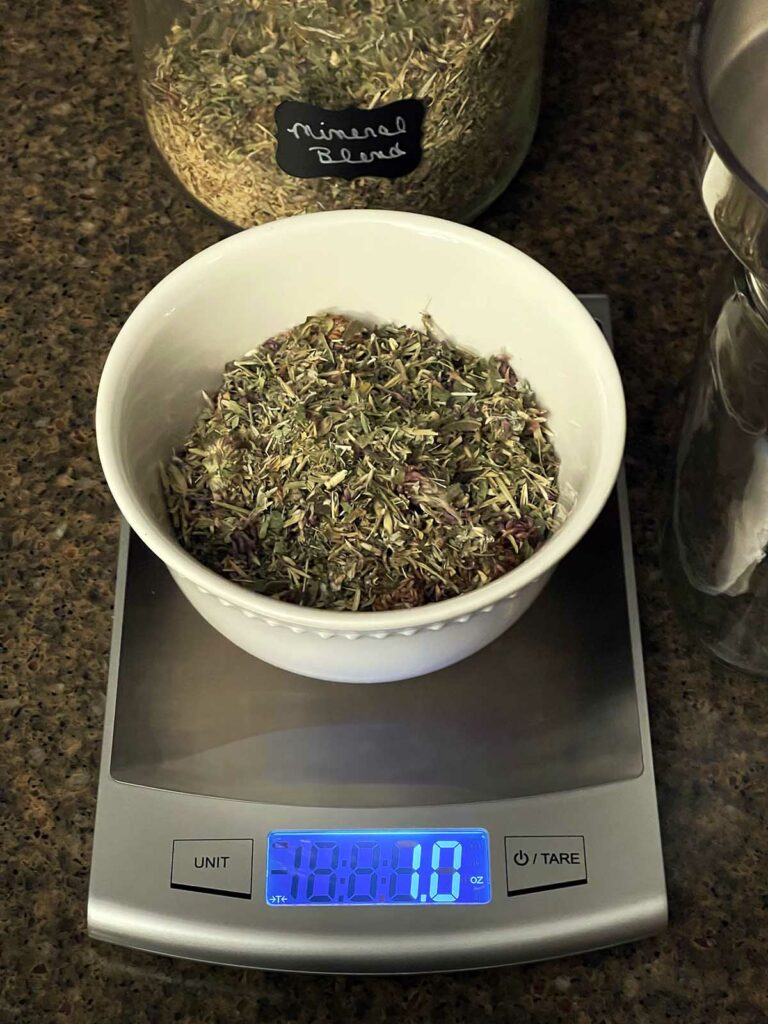
The process of making a nourishing herbal infusion is quite simple. You’ll need a large glass jar, such as a quart-sized mason jar, and a fine strainer, coffee filter or cheesecloth. Start by adding about an ounce (by weight) of dried herb to the jar and covering it with hot water, just off the boil.
In the spirit of making the whole process as simple and doable as possible, I like to blend my herbs ahead of time and store them in a jar of their own. Some herbalists recommend infusing each herb separately in order to really get to know the herbs and distinguish how each one makes you feel. This is a great idea if you’re just starting out and are unfamiliar with the herbs. Once you develop a relationship with these herbs, however, it’s so much simpler to have a ready-made blend ready to go.
Take a minute to determine how much 1 weighed ounce (~30 grams) of your chosen herbs actually is. Now locate a scoop (measuring cup, bowl, etc.) that approximates the amount of herbs you’ll need and store it in your herb blend jar. Now you don’t have to weigh out the herbs everyday. Just scoop, dump and add your hot water. Easy peesy!
(lemon squeezy optional)
Now 1 ounce of dried herb works out to quite a lot. It was over 1 cup of my blend. For this reason, I try to favor herbs that I have free access to. My blend is usually heavy on the horsetail (it grows wild in the island next to our driveway); nettle (it grows wild and I also keep a cultivated patch in my garden); red clover and dandelion (both can be found just about anywhere in North Idaho).
Sometimes I’ll incorporate raspberry leaf from my raspberry patch or chickweed or cleavers, both of which love to pop up in and around said raspberry patch.
Use what you have access to and purchase what you don’t. For example, I usually buy my oatstraw from Mountain Rose Herbs. I may try growing my own oats in the garden one of these days, but until then, MRH is high quality and convenient.
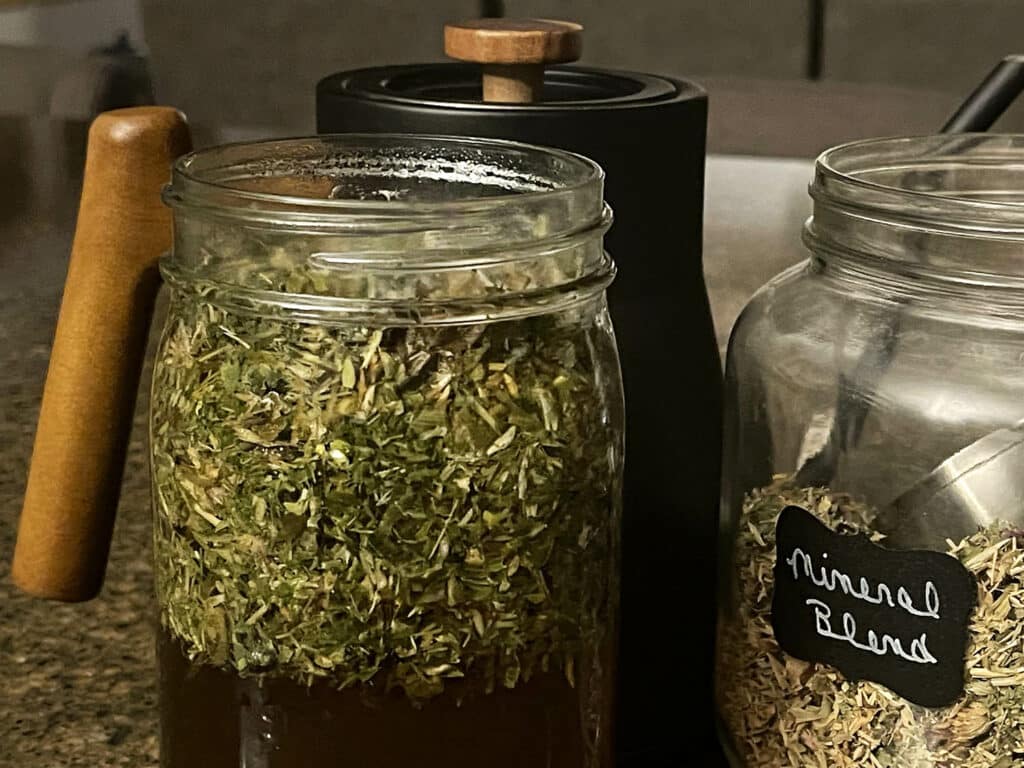
Most herbalists recommend steeping your nourishing herbal infusions for a minimum of 4 hours and optimally overnight (8 to 12 hours). Keep the infusion covered as it steeps and make sure the herbs remain fully submerged. A French press, mason jar with a cold brew strainer or teapot with an infuser lid all work great for this.
Once the infusion is ready, strain out the herbs and drink the liquid warm or cold throughout the day. The infusion will keep in the refrigerator for up to 36 hours.
Try adding a little acid
Is a “vinegar intermediary infusion” a thing? I can’t find that term used anywhere, but since vinegar is the primary solvent you turn to for mineral extraction, it seems logical to me that prepping your herbs with a bit of vinegar before adding the hot water would maximize the mineral extraction in a nourishing herbal infusion.
No? Yes? Maybe? I think yes. I also like the little bit of zing a small amount of apple cider vinegar gives to the beverage.
Apple cider vinegar with the mother or fresh lemon or lime juice are all good acidic options that can help to break down the cell walls of plants and release minerals like calcium and magnesium that are more difficult to extract using water alone.
If you keep a kombucha SCOBY hotel around, the extra-strong kombucha vinegar should also be acidic enough to do the trick.
Simply moisten your dried herbs with your acid of choice and let them sit for 5 to 10 minutes before adding the boiling water. The resulting infusion will have a slight tang from the vinegar or citrus juice, but can be sweetened with a little honey if desired.
Do you drink nourishing herbal infusions?
How do you work them into your routine?
♥

2 Responses
I think “vinegar intermediary infusion” should definitely be a more well known phrase; it’s definitely a thing for me as well. Another awesome blog post filled with epic info. And thanks so much for the links, I just purchased that badass and beautiful French press (in green)! I have a collection of them, vintage ones, groovy looking ones, etc – but it just so happens I’ve been itching for a new one. And voila!
Appreciate you so much!
Thanks so much for the kind words, Asha! So happy to hear you’re also finding benefits from adding a bit of vinegar to your NHIs. And your vintage French press collection sounds simply incredible! The green one is soooo pretty 😍